" height="21px" id="aE25rWru5" transform="translate(6.02 1.01)" width="11.666710897329551px"/></svg>)
" height="20.000028433930208px" id="C8QbQu0ua" transform="translate(2.3 1.72)" width="18px"/></svg>)
" height="15.27606666666667px" id="Mxk6Ub6Mo" transform="translate(0.386 7.539)" width="4.790326666666639px"/><path d="M 10.066 0.05 C 9.89 0.028 9.702 0.017 9.514 0.005 C 6.832 -0.105 5.32 1.485 4.79 2.169 C 4.647 2.356 4.581 2.467 4.581 2.467 L 4.581 0.425 L 0 0.425 L 0 15.701 L 4.581 15.701 L 4.79 15.701 C 4.79 14.145 4.79 12.599 4.79 11.043 C 4.79 10.204 4.79 9.365 4.79 8.527 C 4.79 7.489 4.713 6.385 5.232 5.436 C 5.673 4.641 6.468 4.244 7.362 4.244 C 10.011 4.244 10.066 6.639 10.066 6.86 C 10.066 6.871 10.066 6.882 10.066 6.882 L 10.066 15.767 L 14.857 15.767 L 14.857 5.8 C 14.857 2.39 13.124 0.381 10.066 0.05 Z" fill="rgb(83, 83, 83)" height="15.767187855553347px" id="rDScQOEBh" transform="translate(8.069 7.158)" width="14.85668000000002px"/><path d="M 2.781 5.563 C 4.318 5.563 5.563 4.318 5.563 2.781 C 5.563 1.245 4.318 0 2.781 0 C 1.245 0 0 1.245 0 2.781 C 0 4.318 1.245 5.563 2.781 5.563 Z" fill="rgb(83, 83, 83)" height="5.562959999999999px" id="TT9KpTsO5" width="5.5629599999999755px"/></svg>)
How Providence Public Schools Reduced Edtech Spending by $650,000 Through Data-Driven Software Evaluation
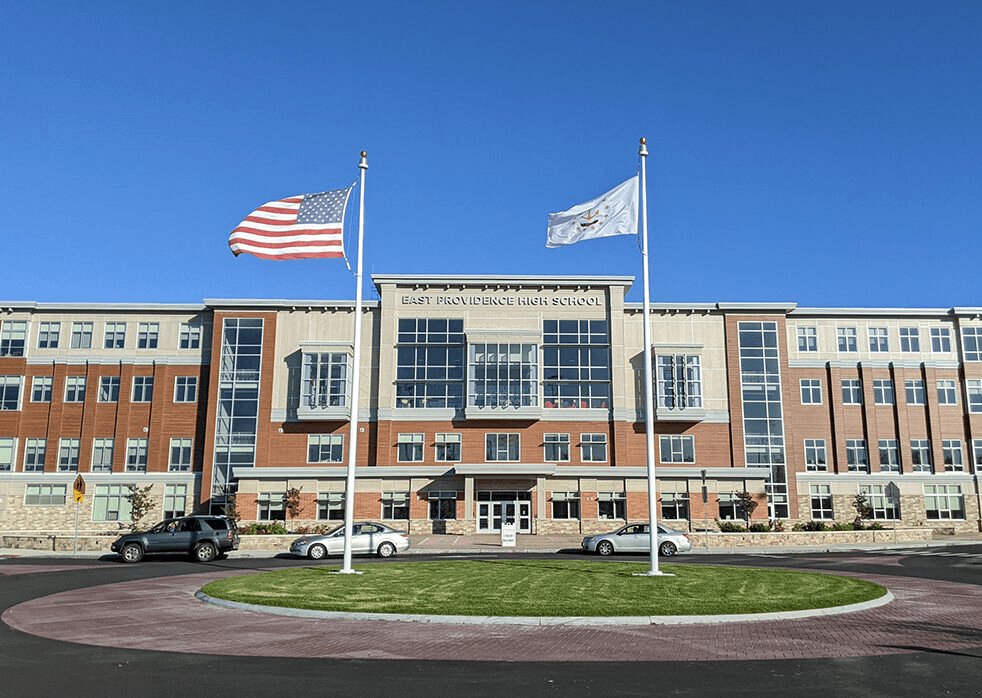
A structured approach to software evaluation helped Providence Public Schools reduce unnecessary spending, improve resource allocation, and strengthen the connection between technology investments and instructional priorities.
“Academic Return on Investment has been a major goal for Providence Public Schools this year. We needed to understand which investments had the biggest impact on student achievement, and this initiative helped us align our resources where they matter most.”
— Joan Jackson, Special Advisor
The Results: $650,000 in Savings and More Strategic Resource Allocation
In the first year of implementing a new data-driven process for software evaluation, Providence Public School District reduced technology spending by more than $650,000.
The district eliminated low-usage contracts and renegotiated others after identifying instances where software licensing exceeded demonstrated need. The process also freed approximately $150,000 for reinvestment in tools more closely aligned with student achievement.
Beyond the financial savings, Providence established a more consistent process for evaluating technology investments based on utilization, cost, and instructional priorities.
“GoTeacher has been a game-changer for Providence Public Schools. We have saved over $650,000 by removing ineffective software and freeing up $150,000 to reinvest in tools that are better aligned with student achievement.”
— Craig Creller, Chief of School Improvement and Innovation
The Challenge: Limited Visibility Into Software Utilization
Like many large school districts, Providence had invested significantly in instructional technology across its schools.
District leaders needed a more systematic way to understand which applications were being used, how utilization differed across schools and grade levels, and whether existing licensing levels reflected actual demand.
Without centralized usage data, annual software evaluations relied on information distributed across teams and systems. This made it more difficult to identify underutilized licenses, evaluate overlapping resources, and consistently incorporate utilization into renewal decisions.
Providence set out to establish a more structured approach to evaluating its technology portfolio and determining where resources could have the greatest instructional value.
The Approach: Establishing a Data-Driven Evaluation Process
Providence’s Teaching and Learning team, in collaboration with the Data and Assessment team, adopted a school-based budgeting model informed by zero-based budgeting principles.
Under the new process, existing software investments would be reviewed annually rather than automatically carried forward. Decisions would consider demonstrated usage, student need, and the district’s broader instructional priorities.
The district established three primary objectives:
Identify and invest in high-impact resources
Support equitable access to effective instructional tools
Reduce unnecessary spending and duplication
Implementing this approach required consistent information about the district’s software portfolio and how applications were being used.
Analyzing Software Utilization Across Schools and Grade Levels
Providence used GoTeacher to centralize software utilization data and examine adoption across different parts of the district.
Rather than relying solely on district-wide usage figures, teams could analyze individual applications by school and grade level. This provided a more detailed view of where licenses were being used and where licensing levels exceeded demonstrated utilization.
The analysis identified opportunities to adjust licensing for certain grade levels, providing additional evidence for renewal and purchasing decisions.
Connecting Software Utilization with Spending
Providence also incorporated financial information into its evaluation process.
By considering software utilization alongside spending, district teams could assess whether existing investment levels were consistent with actual adoption.
This provided a common set of data for discussions between instructional, data, and administrative teams and helped inform decisions to renew, renegotiate, consolidate, or discontinue software investments.
Results: Reducing Costs and Reallocating Resources
Using this process, Providence eliminated low-usage contracts and adjusted licensing where the data indicated that existing levels were unnecessary.
These decisions resulted in more than $650,000 in technology savings during the first year.
Approximately $150,000 was made available for reinvestment in tools more closely aligned with student achievement.
The process also supported broader district objectives, including reducing duplication, simplifying the technology environment for educators, and creating greater consistency and accountability in purchasing decisions.
Establishing an Ongoing Software Evaluation Process
Providence’s work extended beyond a single budget cycle.
The district established a repeatable process for reviewing software investments using a centralized inventory, utilization data, and financial information. These data now provide a foundation for evaluating renewals, identifying opportunities for consolidation, and discussing new technology investments.
A Replicable Model for District Technology Management
Providence’s experience demonstrates how districts can incorporate software utilization into a broader technology investment strategy.
The model combines clear fiscal and instructional objectives with centralized software information, detailed utilization analysis, and a consistent annual review process.
Rather than treating software evaluation as a one-time cost-reduction initiative, Providence established a framework for continuously assessing whether technology investments remain aligned with district priorities.
“We’ve moved from anecdotal conversations to objective decision-making. This approach strengthens our support for schools and helps us better serve our students.”